
Picture this: you're sitting at breakfast with your family on Christmas morning, and your father slams his phone on the table and complains that the stupid thing never works. You ask him what about it doesn't work. He says "the phone!" and picks up his newspaper (yes, the paper kind).
You notice it's a local tabloid and frown - besides the paper waste, you say, surely he knows he can read better sources, like The Guardian or whatever the local halfway decent publication is.

The Guardian won't deliver here! Comes the answer. You look at his phone, sigh, and ask why he doesn't just read it on his phone, forgetting that "it doesn't work." You get reminded. Couple more rounds of that, and you realize it's because he's not turned on his WiFi and the mobile reception in the dining room is terrible, so his "snow plow funny mr Perkins" google search never loaded, and that's probably why he can't read his news on it either.
You argue a bit, and settle on the same outcome as ever - his assertions that the Tabloid Express gives him all the news he needs to know about, and the things they say about the immigrants and the left wing politicians "aren't that bad," and you wondering when he'll finally put in the work and start informing himself properly about what's going on in the world.
But wait - why would he? He's not wrong, right? He reads the news every day, he's probably old enough that global warming won't affect him directly too much, and he knows enough about politics from his 45 years experience voting that he doesn't need any more input.

No, seriously. He's not wrong. And the reason he doesn't change is because not enough people understand that he's not wrong. Because his truth is personal, there's nothing pulling him towards the "better way," his current approach costs nothing to continue doing, and your way is now unpleasant by association with all of the arguments that you've had with him about this. So why would he do anything to change?
This is the core of it. To get someone to learn something new - unless their motivation already exists - we need at least some of the following things:
- An incentive: some reason they want to do this thing. It can be external like getting paid, but the best incentives are intrinsic, like the thing being fun.
- A low barrier to entry: it needs to be easy to start doing the thing and the first steps need to be easy to wrap their head around.
- A reminder or stimulus to do it: like a notification on the phone from Duolingo, or maybe even someone asking them daily how it's going with the thing.
The more motivation exists, the less of the above we need. Clever readers will also realize that these things all act to make motivation easier. That's right - we're trying to replace the lack of intrinsic motivation at the beginning of the process with motivation that comes from the process. Side-note, I'm a big fan of the idea that there's no discipline, only motivation, but that's an article for a different day.
In the above example:
- making your dad's phone automatically turn WiFi back on, putting The Guardian's application on it and subscribing for him takes care of the barrier.
- setting his phone's morning alarm to trigger the Guardian's Headlines podcast when he turns it off takes care of the reminder.
- and calling him up every few days to get excited about a news article that's in the Guardian takes care of the incentive (call your dad, it's been a while).
Those things might do the trick. Or they might not. It's a hard nut to crack, parents and tech. But if not, something similar in this framework will.
I thought this was a UX blog, not a family issues advice column?
Yep, my Dr. Phil ambitions aside, this is a massive UX issue. Your parents are excellent extreme examples of the UX rules we all follow as humans. They've spent years building and cultivating habits, and you're coming at them with new, different ways of doing things. And they're tired. They raised you, for heaven's sake.
So how is this different from taking a bunch of Reddit users and telling them to start using something faster-paced with less persistence, like TikTok? They've spent years building reddit-centric habits, and now you're telling them to train an algorithm to show them the content they've curated manually in their subreddit list?
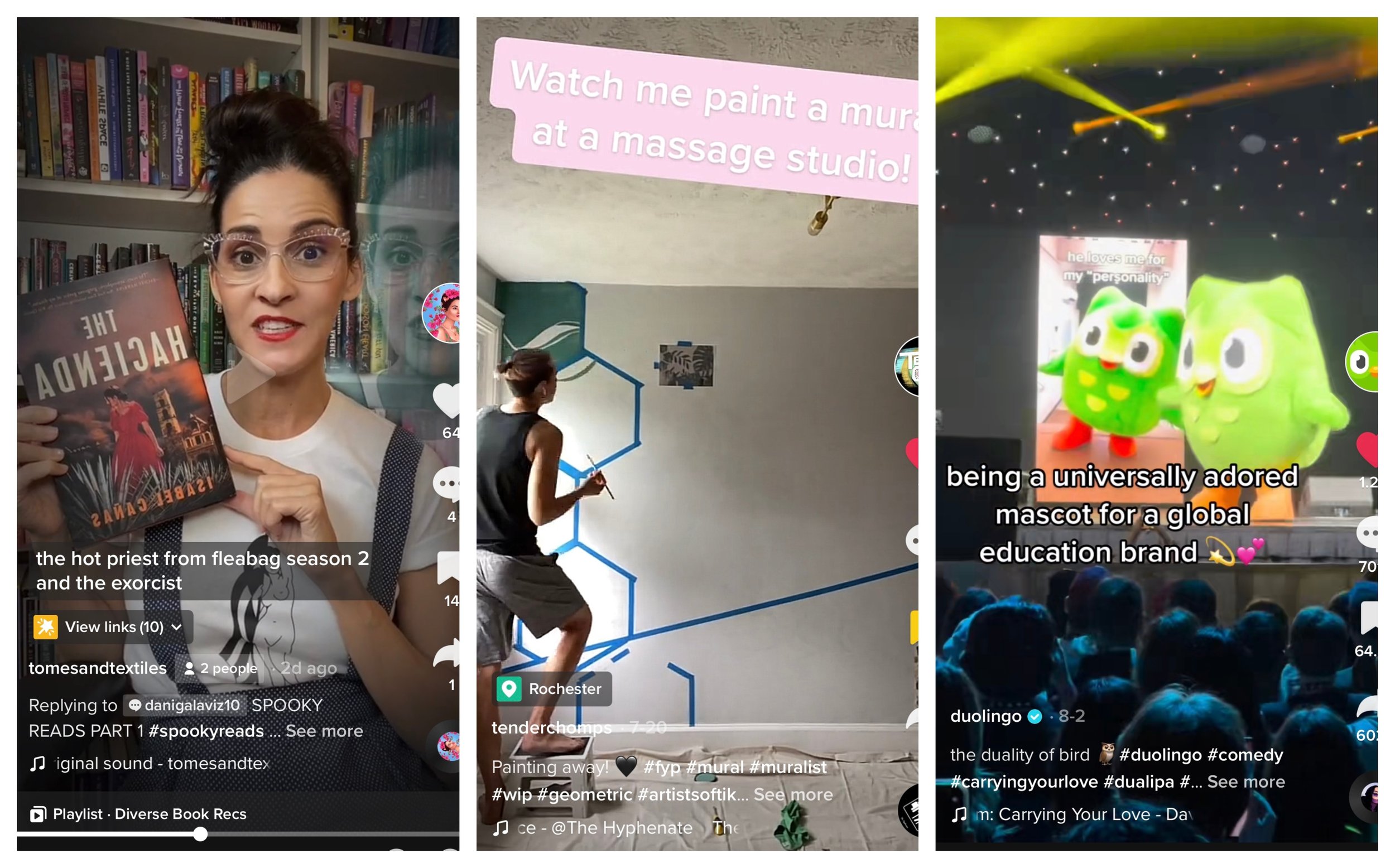
Well, I'm glad you asked, because it's not, and this is a great goddamn example. TikTok's explosive growth is exactly based on these three pillars:
- Training the algorithm is fast and easy, and if you don't like a video, they're all short and you can scroll through seven a second if you're really feeling heavy ADHD: barrier.
- Good TikToks are rehosted constantly, everywhere, including Reddit, with a TikTok brand watermark and the user's username: reminder.
- The content is really damn good and the short-video format is extraordinarily effective, as we saw with Vine: incentive.
If you look at most high-growth applications and games, they all kind of work like this. Network effects, gamification, newsletters - it's all part of this framework.
But [insert thing] is way too complex to be easy and fun!
No it isn't. Fine, maybe it is. Nine times out of ten though, it isn't. You can make nearly anything fun and self-explanatory to its target audience. Put a calculator in front of a cat and the cat won't know what to do with it. Put ball with a hypercomplicated maze inside it with a treat at the center in front of it, and it'll have the treat out faster than you can, guaranteed†.
Perhaps a clearer example - a good IDE (the thing coders put code into when they code and stuff) is gonna be super self-explanatory to a developer, but look indistinguishable from a Terminal (the thing hackers put code into when they hack and stuff) to someone who has no contact with software development, but the latter person isn't the target audience.
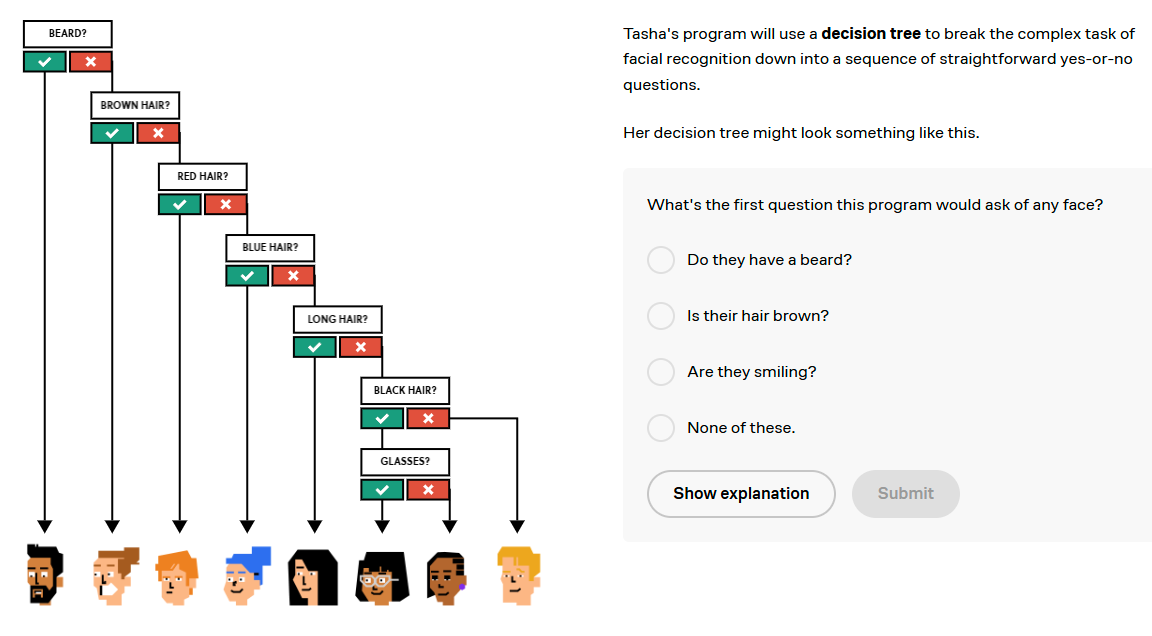
If you want to get the latter person onto code, unless they have the intrinsic motivation to dig through Harvard CS50 and deal with its inaccessiblity and complexity, you need to introduce them more slowly, via concepts they already understand. The example above is Brilliant.
No, really, it's from an online learning platform called Brilliant, but it's also really good. It frames If/Else chains in a way that even your grandmother would get, and then it ramps up the complexity and difficulty slowly but steadily, until you're ready to look at and understand the dreaded IDE & Terminal and what exactly makes them different.
At the end of the day, everybody likes feeling smart and being respected for their intelligence, and while that balance is often really hard to strike, there's very few scenarios where it's not possible to strike it.
Okay, so Families, Coding and Social Media? Weird overlap, so what?
Here's the thing - we're all human. Ergo, this applies to B2B and corporate software and even video games as much as it applies to the above Rogues' Gallery of examples. Explosively successful PLG B2B software (if this abbreviation doesn't tell you anything, you're not the target audience) fulfill exactly these criteria - they make themselves fun and easy to use, and integrate triggers to use them into the target audience's everyday life.
Slack? Everything takes like three clicks and you can do everything from video calls to chat in the same application. Canva? Every stock image site has a linkout to use it in Canva, and it's even easier than Powerpoint for putting quick hacky reports together in. SAP? Well, they're from before any of these concepts were a thing, so they get a pass, but look at how much of a problem Salesforce poses to it by following exactly these principles. Yes, I hear you over there, yelling that Salesforce is also shit, but would you really rather work with SAP? No? Sit down. It's all relative, appreciate what you have.

This article is once again getting too long, so I'll cover the blanket topic of games here in one paragraph before wrapping. In fact, I think I can do it in one sentence.
It's fine if you make your games hard to learn or get into because you want to create some kind of exclusive, gated experience made only for those who really want to experience it, but if your response to someone telling you it was too hard to get into is a "you need to work harder" scoff as if they need to prove themselves worthy to you, you need to get your target audience checked.
That was a long sentence, but that's essentially it, and it's a rule that's pretty much blanket - if you want to convince people to experience what you're building, you need to build a ramp into that experience that makes it easy to get into it, rewards the user for doing so, and reminds the user to come and do it. It's fine to build exclusive experiences, but then you need to accept that most people just won't, and it'll only be those that are already intrinsically motivated to put in all of that work that do.
That's basically it - "you need to work for it" is dead, long live the ease-of-use revolution. In fact, I would even go so far as to say that any variation of "they need to work for it" is, nowadays, an excuse to not devote the time and energy that your product deserves to be fun and easy to use. A bit anti-climactic, but I hope I've made my point in the examples above. Build good products, but help people get on board with them - after all, you can lead a horse to water, but it might throw stones.
Oh, and I apologise to all of the fathers or children of fathers out there who read the overly long example at the top of this post - the character I outlined is obviously extraordinarily caricaturey and not representative of real fathers. Well, in most cases.
† YMMV, I have two bengals, so they'll probably figure out how to break the damn thing, but it's about the achievement, not the method.