
Hot take: roleplaying in the Year of our Lord 2023 has two big problems — Dungeons and Dragons. Hear me out.
Since the Great Pandemic and our collective need for connection in an isolated, locked-in world catapulted both parasocial phenomena like Critical Role and Dimension20 and virtual-play social phenomena like, well, actually playing Dungeons and Dragons and its ilk, roleplaying has become more mainstreamed than ever.
The problem, of course, is that it’s less its ilk, and more Dungeons and Dragons specifically that pushed its way into the limelight, and D&D in its fifth iteration is a bit of a stitched-together abomination with a very poor user experience. The long-form history lesson on why this is is probably a topic for a different article (“Knee-Jerk Reactions to User Feedback”?), here's the short-form rub.
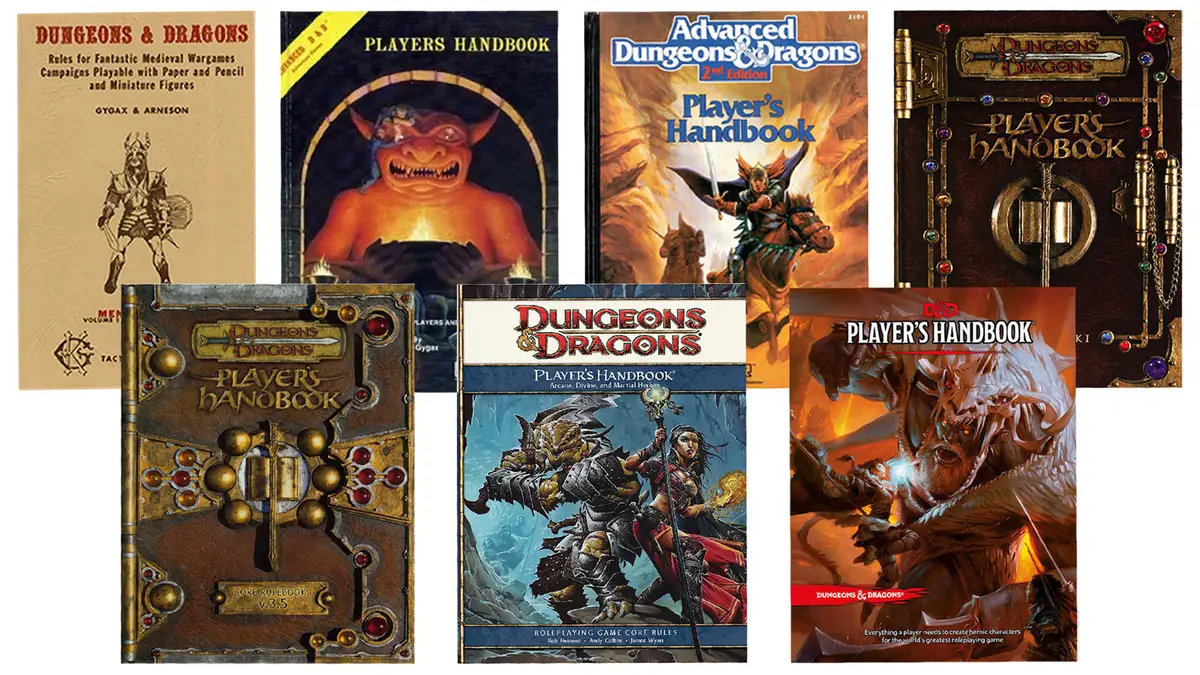
- Original D&D, Advanced D&D, & 2nd Edition were primarily dungeon crawlers that were born of old-school miniature war-games (think Warhammer, but more World War 2 Hammer).
- 3rd Edition & 3.5 expanded the scope of the game to a world-story simulator, adding social interaction frameworks.
- 4th Edition attempted to streamline the rules while expanding character options, with the bet being that it would mostly be played on Wizards of the Coast’s then-in-development virtual tabletop — which never came to be.
- 5th Edition, finally, as a response to the backlash at 4E, tried to build a narrative game on the bones of all of what came before.
And it’s these bones that are the problem. Ha. Bones. Get it, like roll the bones?
Yep, I’m about to segue into talking about dice. Among other things.
You see, with 5th Edition came a shift in focus for the publishers — they wanted to make it broadly-appealing. If I were a speculating person, I would guess that this had something to do with the Hasbro acquistion of Wizards of the Coast in 2010, given the timing with the early phases of 5E concept development. Shareholder value and what-not.
Yet, the core audience that was already invested in the brand and the product were expressing that they wished a return to 3.5’s systems, and player counts for Pathfinder were supporting this. Further complicating the issue — tabletop roleplaying was still recovering from its decades of stigma as an impenetrable, complicated affair that was only for hyper-nerds and true sunlight-shunners. Dungeons, after all.
This creates a scenario that’s very much like a cursed problem of game design. If we build 5E to strictly appeal to the 3.5 fans, we keep the high barrier to entry for newcomers and weaken our broad appeal. If we just iterate on the design patterns that were started with 4E and make them actually work, we lose our existing audience, who can’t see the potential there because the poor implementation of these patterns. If we do a complete ground-up rebuild of the system in an attempt to find a way to dodge this problem, we risk losing 4 editions’ worth of lessons learned and back-catalogue (and audience) and balloon development costs.
So what did Wizards do?
Well, kind of all of the above, as well as a very clever and somewhat parasitic special maneuvre.
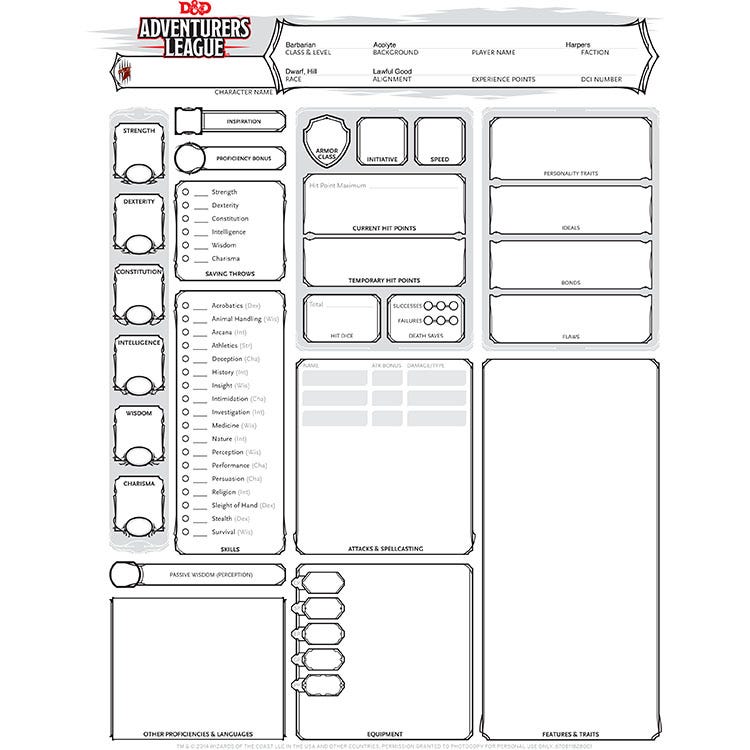
First, classes were simplified down into linear progressions, away from the modular and complicated builds of 2E and 3.5. With few exceptions (notably my favourite 5E class, the Warlock), the only meaningful character choices you need to make for a character’s build is their initial level 1 setup and one subclass selection in the first three levels — which, for some characters, comes at level 1 as well.
Second, classes were clearly segmented into martials, which came with little to no combat options, and casters, for those nerds that actually want to have to think for a few minutes in order to play the game. Third, feats were sidelined into a “variant rule” in favour of straight numerical increases to your base stats. This double-whammy was what led to the classic “chuck a bit of popcorn at your fighter to wake them up from their nap so they can attack twice like they did the last 5 rounds and then go back to sleep” effect, by the way.
Finally, lots of care was put into making sure every section of the book had at least five mentions of “work with your DM” or “ask your DM.”
“Whoa,” I hear some of you say, “are you criticising Wizards for reminding players to respect and talk to their Dungeon Master?” I assure you — I’m not. As a recovering forever DM myself, I relish these reminders. What it took me years to realise, however, is the Big Empty right before almost every one of these cases. That absence that’s uncomfortable to look at. Like something is itching, but you don’t really know what it is, and you’d rather not think about it.
You see, what’s missing is almost always robust prompting for the player to think about their own answers for these open questions. In the case of the Cleric — where in the Player’s Handbook is the battery of questions about what God or other Power they pull their magic from? Why they entered their service? What event caused them to have True Faith? “Work with the DM,” the book says quietly.
This is, in a way, genius. A player, in the 5E framework, can follow a simple set of instructions and not stress their creativity muscle, and without much real effort, roll a cookie-cutter character. Then, they can do the same thing for every level. Ever wonder why nearly every Rogue you’ve played with is, at the core, the same character? This is why. The primary identity of your character in DND is your class, and the 5E funnel, in only asking you any semblance of personality-based questions after you’ve set all the mechanical attributes of your character, allows you to roll pre-generated characters without realising it.
This lets the subset of players that actually deep-dive the lore, mechanics and gameplay systems of Dungeons and Dragons stick to the role that they fit best to in this environment, the Dungeon Master. So there we have it — we keep the 3.5 players on as Ambassadors and offer them the same background systems that were kind of always there, and we make being a player at the table super low-friction. Sure, that puts a lot of pressure on the DM to deliver, and sure, that means that we teach players to not engage in story co-creation and be led on a story told by the DM, but it’s kind of always been like that in D&D and it makes for an easy onboarding into the hobby.
But wait, Eve, you mentioned something about dice? And this all sounds kind of good, how does any of this make the game less accessible?
Well, you see — here’s the problem. I snuck in a little aside up there, for those paying extra attention. The background systems from 3.5 are still there. Hell, there’s even an inventory list that includes a ten-foot pole† — something that nobody’s needed since, what, second edition?
And no matter how much load you put on the DM, the players are still going to need to learn how to deal with these systems in order for the game to not be super painful for everyone three or four sessions in.
You want to play a spellcaster, but like, a cool one and not a nerdy maths tracking wizard? Too bad, you still need to learn post-Vancian Spell Slots and how Up- and Down-casting work, and then do massive dice math and understand monster saving throws and legendary resistance.
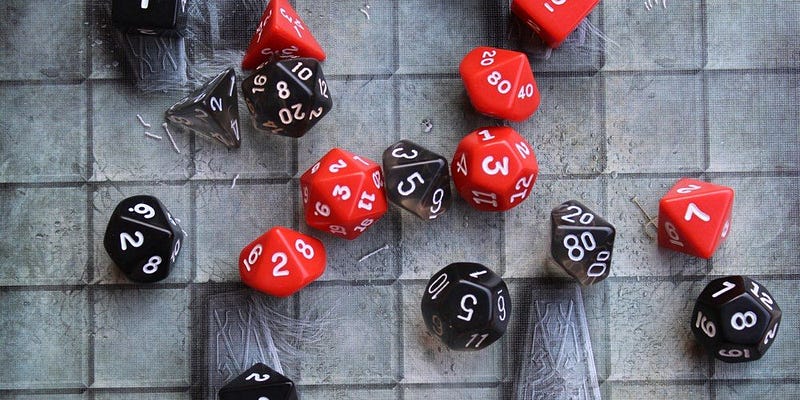
You want to play a Paladin with a magic greatsword with a rider, attack with Smite and also use a Blazing Smite? Well, time to start counting up how many d4s, d6es, d8s, and d12s you get for that little action — the rest of us best pray to Ao that you brought more than one of each of those dice.
You want to convince that poor guard to let you through the gates to where you need to go, but you No Talk Good, Just Have Big Muscle? Well, go on and unlearn everything you learned about the Eighteen (!) Proficiencies each being bound to a specific stat, go ahead and make an Intimidation Roll With Strength. Let’s not even get started on the conversation about how Proficiency Score + Expertise + Ability Score maths out into your bonus to a given skill, and why it changes at some levels.
See, 5th Edition is still extraordinarily rules-heavy at its core. I’m not an enemy of rules — I love them, or I would never have become a DM to begin with. The problem is, heavy rules, for me, requires heavy payout. They have to reward you for using them.
In Chess, to be extraordinarily cliché, the rules provide you a framework to think five steps ahead and understand where a play can take you, and eventually pay off in a very satisfying tactical victory (unless you’re me in any case). In Pathfinder, they allow you to create a character that does exactly what you want them to in a very specific way. In Monopoly, they finally give you a reason to stop talking to that uncle that you’ve always kind of not liked.
In 5E, because of these clashes in design patterns, all they do is make the casual player that wants to just roll a character, roll some dice and loot some dungeons feel like they spent time learning things that limit their ability to be free-form creative.
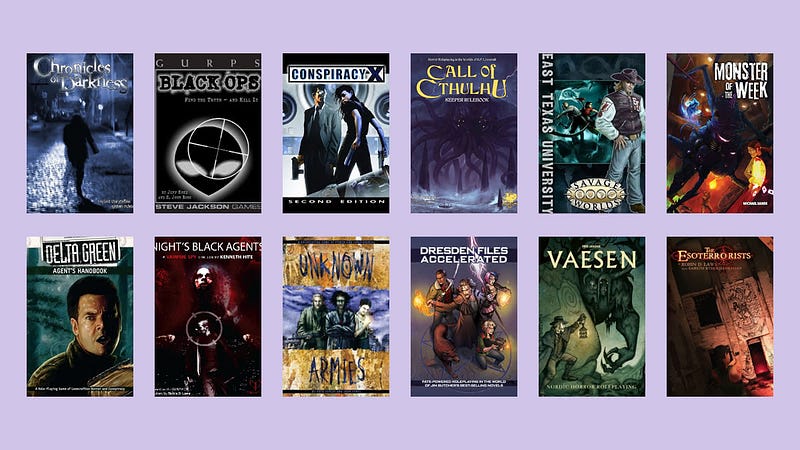
There’s plenty of Pen & Paper systems out there that have better Rule-to-Payout ratios. Some have more Payout, like Lancer, Blades in the Dark or, I’m told, Das Schwarze Auge. Some have much less Rules, and therefore have a lower Rule-Payout Boundary — Fiasco, any of the new Old School Revival Games, or my personal This-Shouldn’t-Surprise-Me Prize winner, Honey Heist. Some are just better at meeting in the middle, like Heart, Wildsea, or my table’s current system, Daggerheart — which I firmly believe was born of the same issues that I have with 5th Edition.
But here we get to the real, core issue. Fifth Edition D&D is the most popular roleplaying game in the world. Which means that it’s the first thing most people getting into the hobby learn nowadays. Which means the patterns they learn from it, like a tourist stepping off the plane at Heathrow, London, to a rainy day and deciding, “well, look at that, it really is always like that here,” remain the expectation for any system that they then decide to move on to.
With a good DM, 5th Edition is incredible to play, and the payout is definitely enough to justify learning it. With a bad DM, and my word have I read some horror stories on reddit, maybe not quite as much so. Either way, it’s work. And here’s the thing: Pen & Paper as a genre has so much potential for being even better than 5th Edition, often with much less work needed to get there.
But because of their learned behaviour from 5th Edition, exactly these casual players wind up being extremely scared of branching out, finding out if there’s something that can do even more for them, because they expect to have to spend months learning the next one, like they did for this one.

I don’t have a solution here. This is just a scream into the void. I think it’s wonderful that Wizards and the global community have managed to mainstream roleplaying as a hobby as much as they have. I really do. But I’m a min-maxer, an optimizer, and while I think 5th Edition has some cases where it truly is the best tool for the job, I think the majority of these players would be much better off exploring and finding a system that fits their particular desired experience better.
This article doesn’t even dive into the question of modern D&D’s purposefully-vanilla setting. Nor does it touch on the topic of DM Pressure or the Co-Creation Trap I mentioned before. Nor does it answer the question of how the rules framework contributes to the experience; for instance, with Horror and the rift between Call of Cthulhu and running Curse of Strahd in 5E. Or whether 5E is even typical roleplaying or completely its own thing.
There’s a lot more ground that we could cover, but I think this is long enough for a first post on my new blog. We’ll get to those in due time.
If there’s one thing I want you to take away from this article, I guess, is that it’s okay to feel scared of trying new systems if all you know is Fifth Edition. But the rest of the pen & paper world isn’t like that, and it can be great fun and a totally different experience, with much less up-front investment, to go out and explore that.
In any case, I’m Eve, and welcome to my blog, Burn the Fucking Manual, where you’ll find a slew of my heavily biased, opinionated takes on the usability of games and other everyday things. I promise I don’t always hate on things this much, either — this is just something that’s been boiling up in me for a while.
Until next time, keep being awesome, and never be afraid to expect more from the things you spend your time on — it’s the most valuable thing you have.
† It was to trigger traps from outside the usual range of traps. They didn't even try to hide the gameyness of the system - and that's kind of beautiful.